


NEUROANATOMY is an annual journal of neuroanatomy and neuroscience. It is mainly published as an electronic journal in Adobe PDF format. Although all the articles' copyright holder is neuroanatomy.org, NEUROANATOMY is an open access journal. The term open access gives the right of readers to read, download, distribute, copy, print, search, or link to the full texts of the articles free of charge.
This website is a scientifical rather than a consultation tool. The authors have, as far as it is possible, taken care to ensure that the information given in this website is accurate and up to date. However, neither the authors and the editors, nor the publisher, can accept any legal responsibility for any errors or omissions that may be made in the course of implementation of the information contained herein.
Instructions to authors
NEUROANATOMY annually publishes review articles related to the morphology, clinical, and functional anatomy of the central and peripheral nervous systems. The content of the NEUROANATOMY is determined by the Editors. NEUROANATOMY, the Publisher, and the Editors assume no responsibility for the statements in the articles; authors carry the scientific and legal responsibilties of their own articles. The manuscript which is submitted to the journal must not contain previously published material or material under consideration for publication elsewhere. Accepted manuscripts become the property of NEUROANATOMY and may not be republished. All manuscripts will undergo peer review. A final review and a subsequent decision relative to publication will then be made by a NEUROANATOMY editor.
Manuscripts and all correspondence should be addressed to the Editors
Prof. Dr. M. Mustafa Aldur, MD-PhD; Hacettepe University, Faculty of Medicine, Department of Anatomy, Ankara, Türkiye
Responsibilities of the Authors
By submitting a manuscript for publication, each author acknowledges having made a substantial contribution in the conception and design of the study, the analysis and interpretation of the results, and the writing of the paper, and has approved the final submitted version of the paper. Each author thus also acknowledges responsibility for the integrity of the manuscript, assures the originality of the manuscript, and guarantees that duplicate or redundant publications or submissions have not occurred. The Editors reserve the right to request the original data obtained in the investigation. Authors are responsible for all statements made in the text.
Manuscript Submission
These instructions are based in part on recommendations in the Uniform Requirements for Manuscripts Submitted to Biomedical Journal [Ann. Intern. Med. 1997; 126: 36-47]. Variations from guidelines in this publication reflect the individual style of NEUROANATOMY.
The authors should:
Submit an electronic version of text (as a MS WORD document), unlabeled and labeled images (as JPEG files).
Prepare a copyright transfer form signed by all authors.
Attach a portrait picture of the corresponding author to the manuscript.
Organize the manuscript as follows: Title page, Abstract, Introduction, Main review text block, Conclusion, Acknowledgments, References, Figure legends, and Tables.
Keep acronyms and abbreviations to a minimum. When an abbreviation is used, define it at first mention and follow with the abbreviation in parentheses.
Categories of Submission
📄 Review Articles
The author(s) is free to design the paper. There is no limitation in the page number in this category. However, the authors will be informed to shorten the article in case of unnecessarily long papers. References, figures, and legends follow the guidelines described below. The Abstract section is needed.
Title Page. The following information should appear: title of article; authors’ name, and last name; affiliations, grant support, and presentation in part or whole at any meeting. Identify the corresponding author and provide full mailing address, phone and fax numbers, and e-mail address.
Abstract. The abstract is limited to 300 words, and should describe the essential aspects of the paper. No references should be cited. Five keywords should be provided.
Introduction. Include brief background information on the subject. The gain of this review article to the literature may be described as a last sentence.
Main Review Text Block. This section may be divided into subsections if it facilitates reading the paper. If tables and graphic material will ease the understanding of the review, include them. In appropriate place, cite figures and graphs.
Conclusion. In a separate section, summarize the major points of the review.
Acknowledgments. Acknowledgments should appear on a separate page.
References. The authors should pay a special attention to limit the number of references up to 40. Section must begin on a separate page. References are numbered consecutively in the order in which they appear in the text. All references must be cited in the text, where numbers are enclosed in [square brackets] on line with the text (not superscript). Papers submitted but not yet accepted for publication should not be cited in the text. Inclusive page numbers (e.g., 491-492) must be provided for all references. Journal names should be abbreviated according to MeSH. All authors should be listed in references.
Style and punctuation of references
[For EndNote users: The EndNote output style file for NEUROANATOMY can be downloaded from this LINK. After the download process completed, Neuroanatomy.ens file should be placed inside the EndNote > Styles file.]
Journal article. [Reference number] Aldur MM, Celik HH, Sargon MF, Dagdeviren A, Aksit MD, Taner D. Unreported anatomical variation of septum pellucidum. Clin. Anat. 1997; 10: 245-249.
Book. [Reference number] Noback CR, Demarest RJ. The Human Nervous System. 2nd Ed., New York, McGraw-Hill. 1975; 199-201.
Edited book. [Reference number] Wyngaarden JB. Principles of human genetics. In: Wyngaarden JB, Smith LH, eds. Cecil Textbook of Medicine. 18th Ed., Philadelphia, W. B. Saunders Company. 1988; 146-152.
Tables. Each table should be given on a separate page. Each table has a short, descriptive title. Tables are numbered in the order cited in the text. Abbreviations are defined as footnotes at the bottom of each table. Tables should not duplicate data given in the text or figures.
Figures and Legends. The complete sets of original figures must be submitted. Legends should be in the present tense (e.g., ‘Illustration shows ...’). Subjects’ names must not appear on the figures. Labels should contrast well with the background. Images should be uniform in size and magnification. Illustrations should be free of all identifying information relative to the subject and institution. Line drawings should be professional in quality. Written permission for use of all previously published illustrations must be included with submission, and the source should be referenced in the legends. Written permission from any person recognizable in a photo is required. Legends must be double spaced, and figures are numbered in the order cited in the text. Submit color prints only if color is essential in understanding the material presented. Label all pertinent findings.
📄 Original Articles
By October 1st, 2008, we will no longer feature original articles.
📄 Case Reports
By June 1st, 2008, we will no longer feature case reports.
📄 Letters to the Editor
Letters to the Editor may be used to describe in an extremely brief manner either an observation of interest to our readers, an opinion relative to the NEUROANATOMY, or constructive observations or criticisms of published material. Letters should be no more than two pages and should be submitted with a brief title. A maximum of four references may be included. Letters are published at the discretion of the journal and are subject to editing.
📄 Books for Review
Publishers and authors who wish to have their titles considered for review should send review copies to Prof. Dr. M. Mustafa Aldur, Hacettepe University, Faculty of Medicine, Department of Anatomy, Ankara, Türkiye.
Editorial Board [2002-2011]
Honorary Editor • Tuncalp OZGEN [MD]
Founding Editors • M. Dogan AKSIT [PhD], Ruhgun BASAR [PhD]
Editor • M. Mustafa ALDUR [MD-PhD]
Associate Editor • Selcuk TUNALI [MD-PhD]
Editorial Board [2023-2025]
Honorary Editor • H. Hamdi CELIK [MD-PhD]
Editor-in-Chief • M. Mustafa ALDUR [MD-PhD]
Editors • Sinem AKKASOGLU [PhD], Mustafa AKTEKIN [MD-PhD], Nihal APAYDIN [MD-PhD], Alp BAYRAMOGLU [MD-PhD], Mehmet BILGEN [PhD], Selma CALISKAN [MD], Emre Can CELEBIOGLU [MD-PhD], M. Deniz DEMIRYUREK [MD-PhD], Burcu ERCAKMAK [MD], Mine FARIMAZ [PhD], Aysegul FIRAT [MD], Ceren GUNENC [MD-PhD], Hakan OZTURK [MD-PhD], İlkan TATAR [MD-PhD], Eray TUCCAR [MD-PhD], Selçuk TUNALI [MD-PhD], H. Selcuk SURUCU [MD-PhD]
Scientific Advisory Board• Anıl ARAT [MD], Mustafa BERKER [MD-PhD], Kazım Cihan CAN [MD], Aygun ERTUGRUL [MD], Rahsan GOCMEN [MD], Sahin HANALIOGLU [MD-PhD], Ahmet Ilkay ISIKAY [MD-PhD], Mehmet Akif TOPCUOOGLU [MD], Boran URFALI [MD], M. Kazım YAZICI [MD],
Language Editors • Deniz DOGRU [MD], Gulay GOK [PhD], Derya KARAKOC [MD], A. Beliz TASCIOGLU [PhD],
Editorial Assitants • Hilal AKDEMİR [MD-PhD], Hasan Barıs ILGAZ [MD-PhD]
Medical Illustrations • medikal.illustrasyon.org
Typesetting • Ahmet AKAY
Owned and published by M. Mustafa ALDUR
Links

Medical Illustrations • medikal.illustrasyon.org
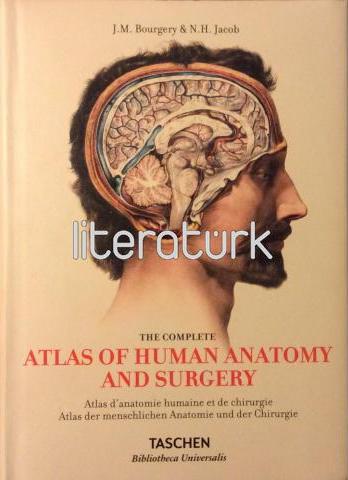
Book collection • literaturk.com

QROI.org • QROI.org
Abstracting and Indexing
NEUROANATOMY is indexed by SCOPUS, EMBASE and NLM Locatorplus.
Readers may find indexation data in SCImago web site.
SCOPUS [Medicine - Anatomy] • 2012 - Q3 • 2011 - Q3, • 2010 - Q3, • 2009 - Q4, • 2008 - Q4, • 2007 - Q3, • 2006 - Q4, • 2005 - Q4, • 2004 - Q4, • 2003 - Q4, • 2002 - Q